

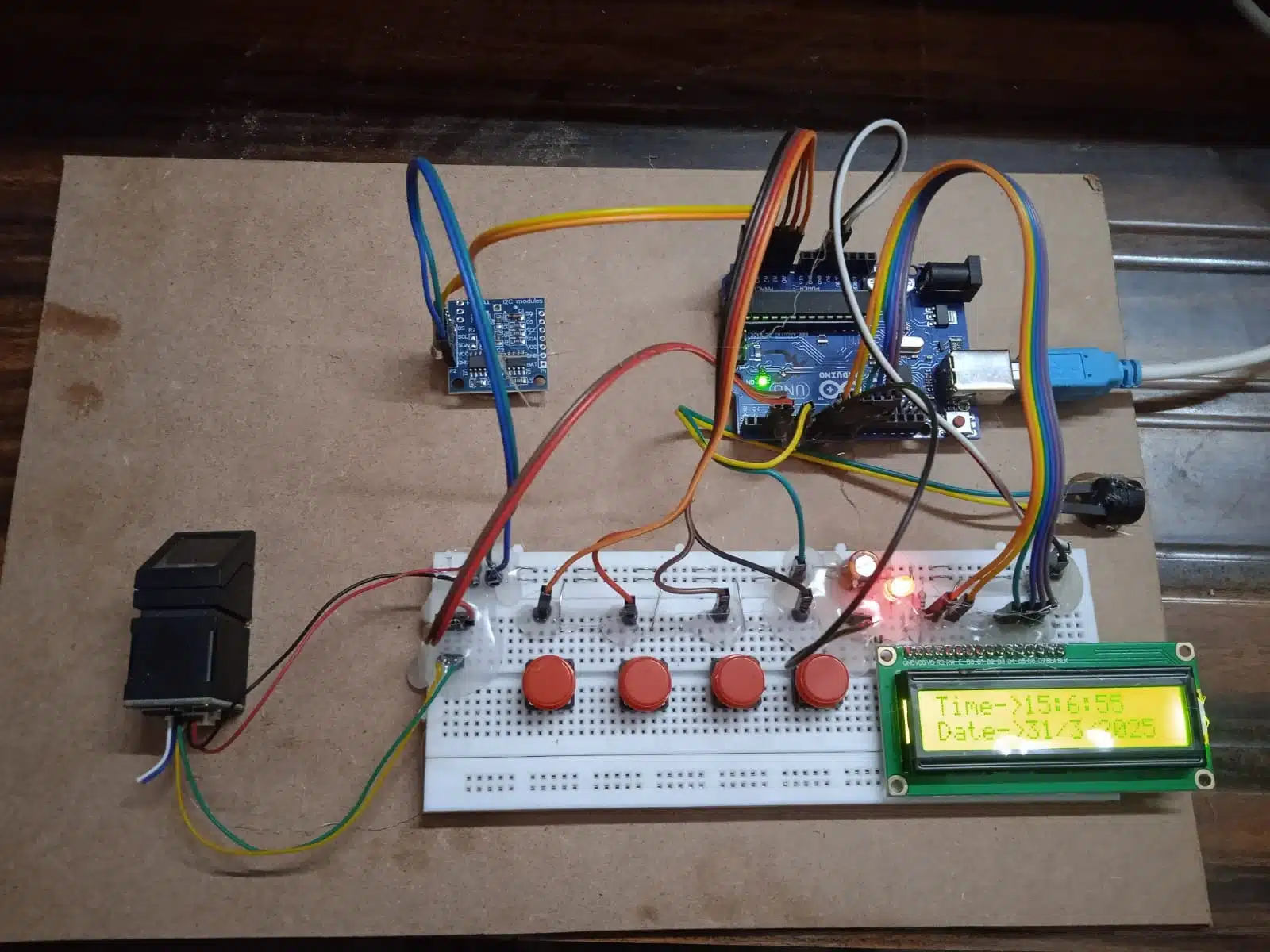
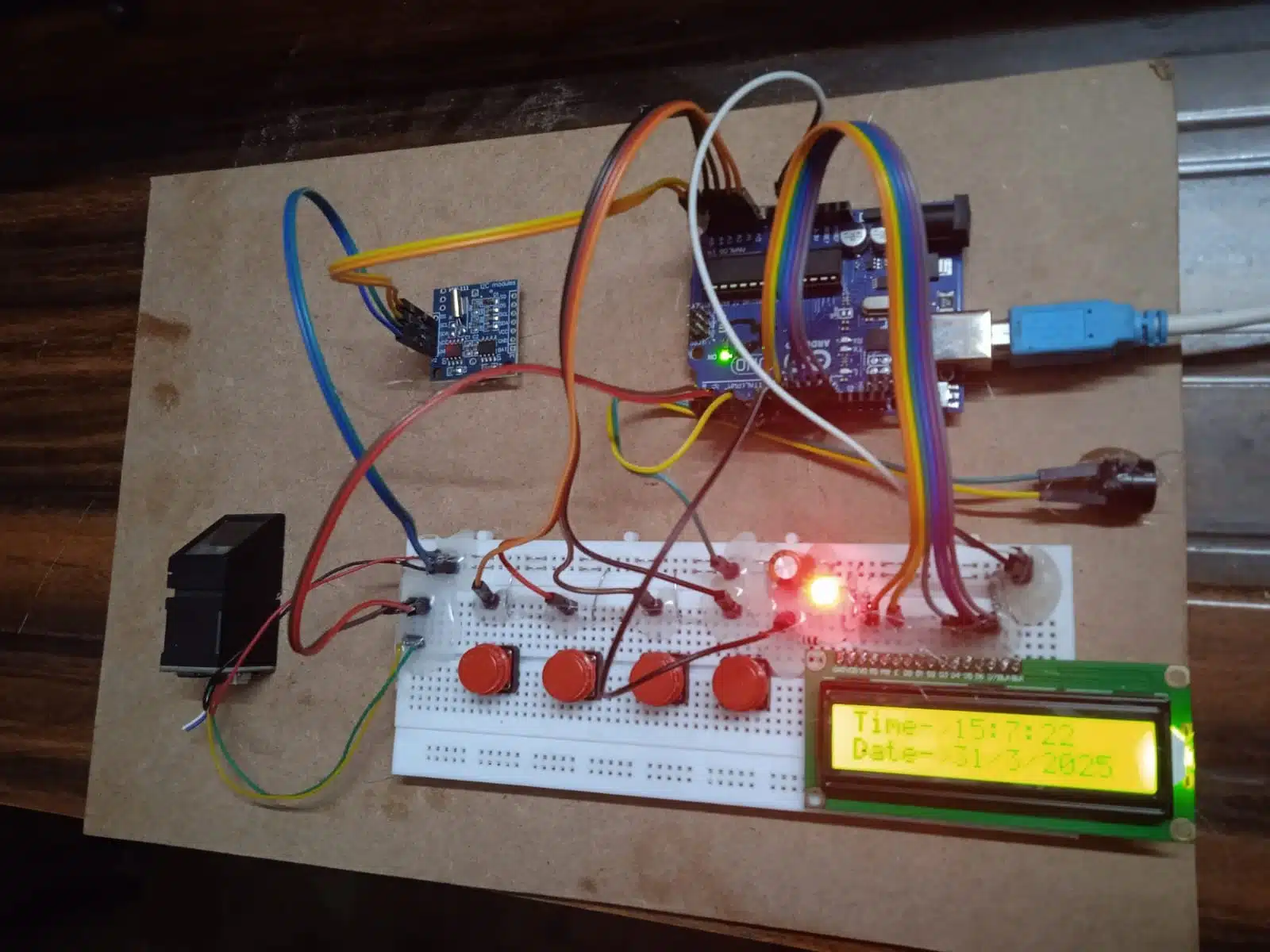
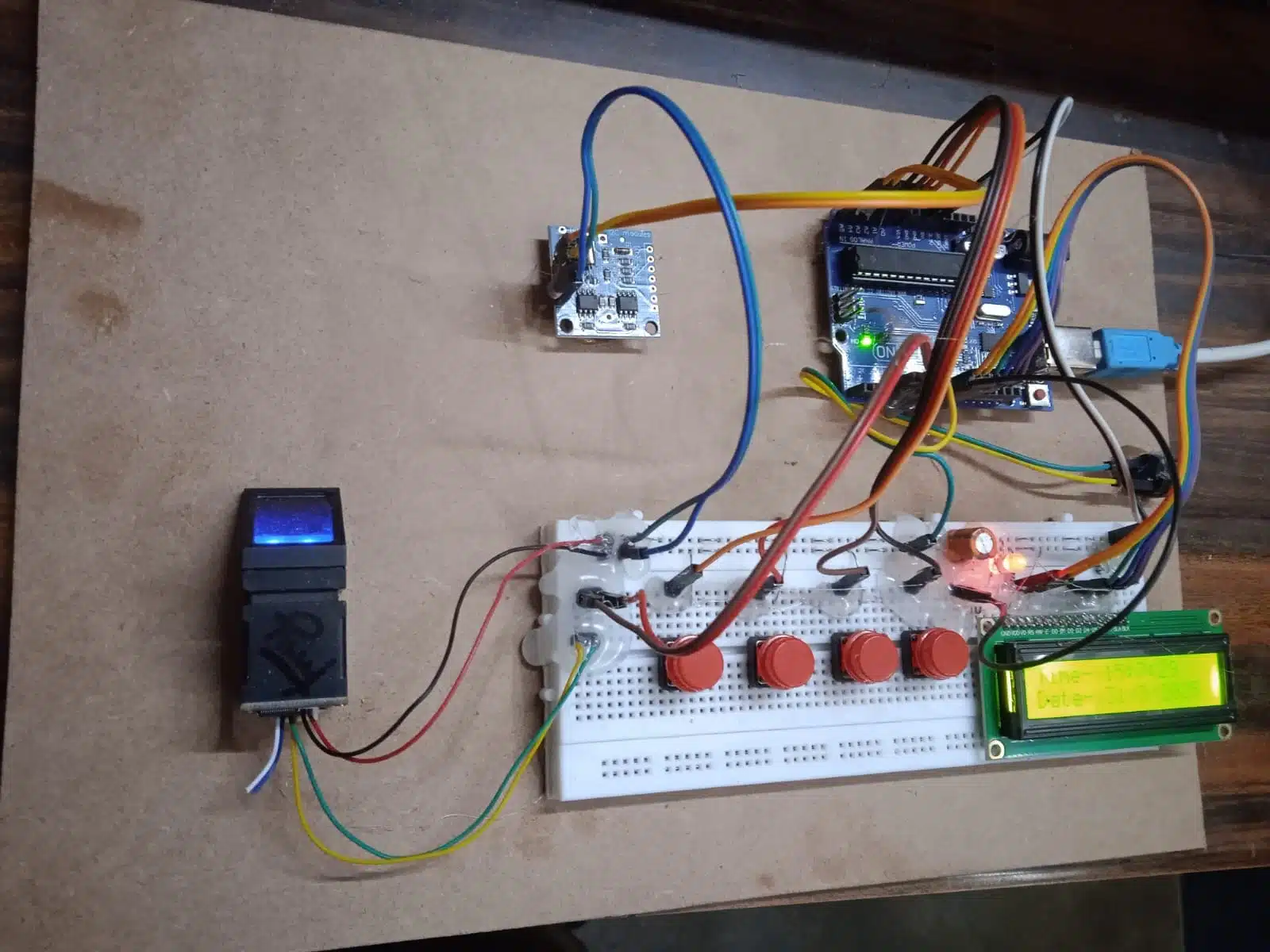
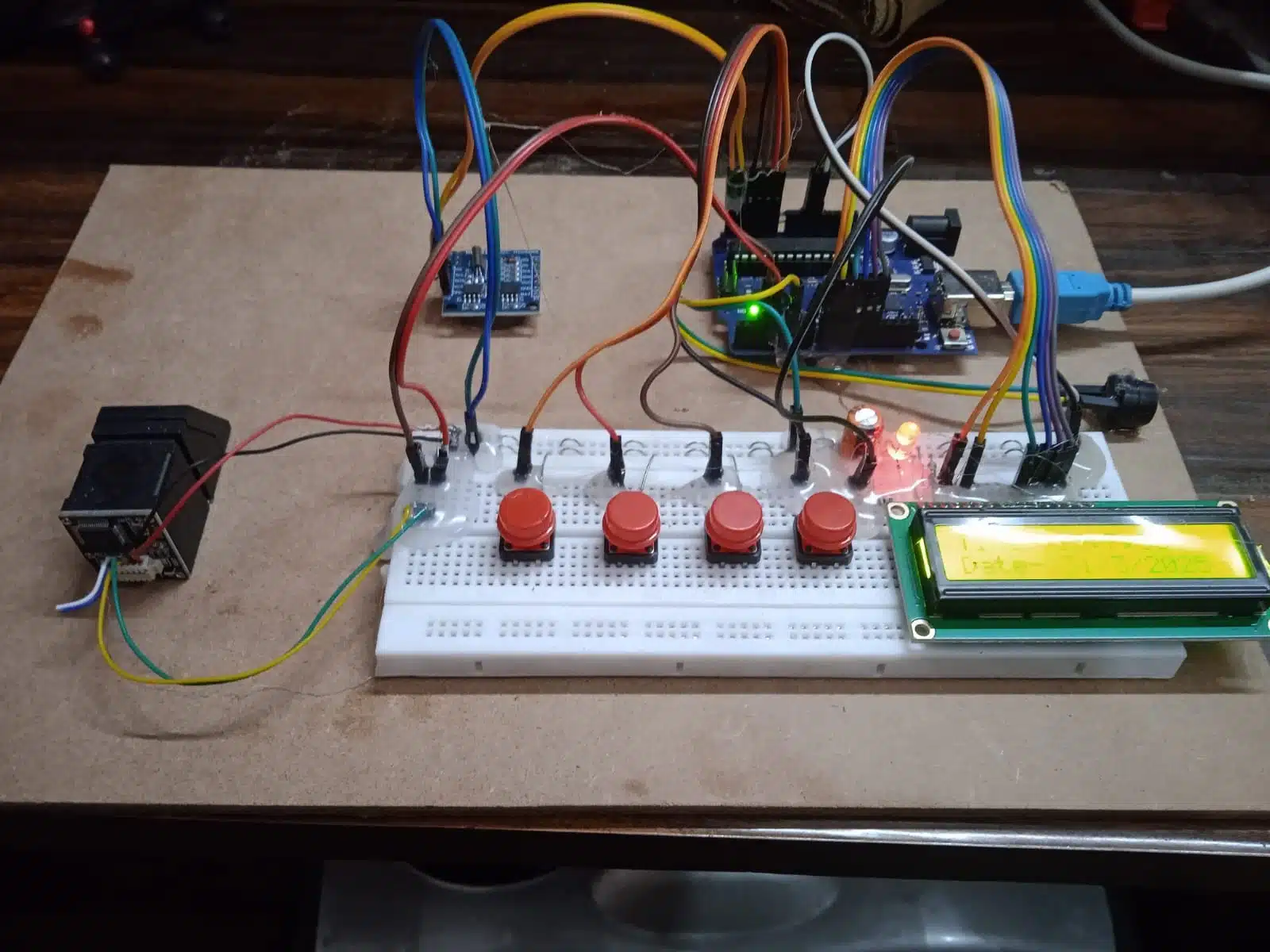


Biometric Attendance System Using Arduino
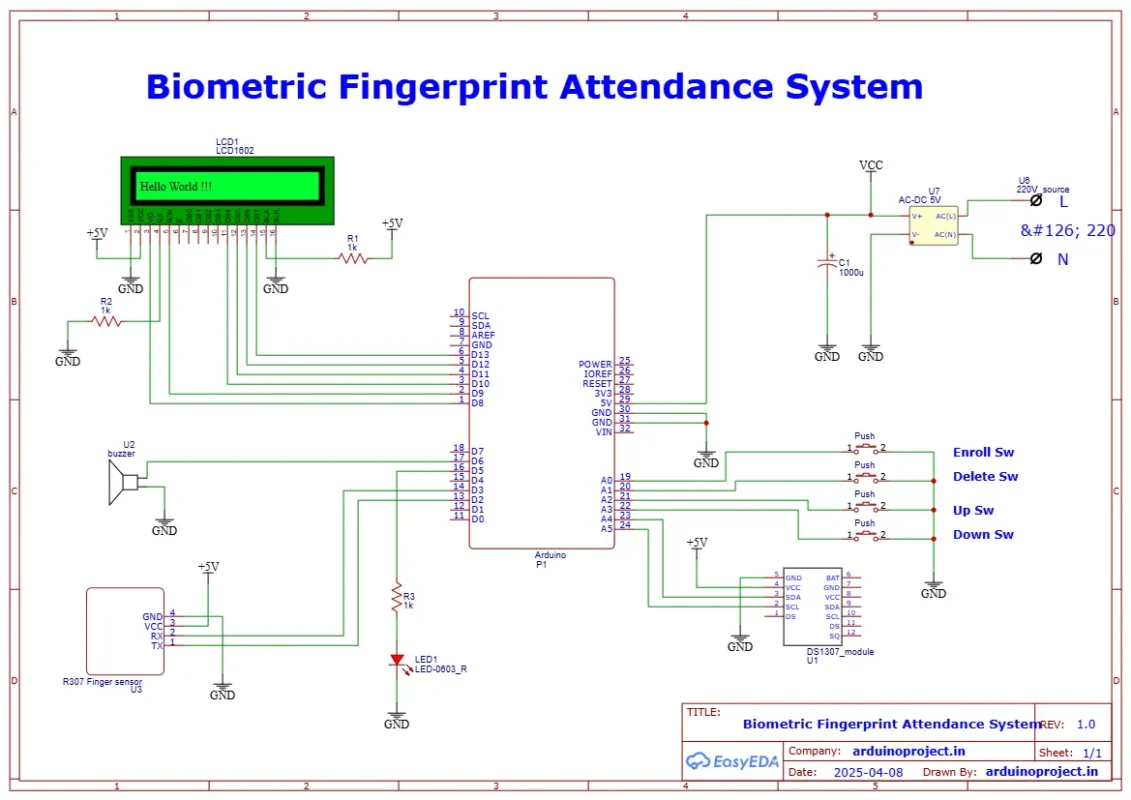
Abstract The Biometric Attendance System is a reliable and efficient method to record and manage attendance using fingerprint recognition. This system utilizes an Arduino microcontroller, an LCD display, a breadboard, a 5V power supply, an RTC module (DS1307), and an R307 fingerprint sensor. The system functions in three stages: enrollment, attendance marking, and attendance retrieval. This document provides an in-depth report on the design, implementation, and functionality of this project.
1. Introduction Attendance tracking is a crucial aspect of various institutions, including schools, colleges, and workplaces. Traditional attendance systems, such as manual registers and ID cards, are prone to errors and manipulation. To overcome these issues, biometric attendance systems offer a more secure and automated method of tracking attendance based on fingerprint recognition.
This project aims to develop a biometric attendance system using an Arduino microcontroller and an R307 fingerprint sensor. The system ensures accuracy, security, and ease of use. It records attendance with a timestamp and stores it in the EEPROM of the Arduino.
2. Components Used
- Arduino (Uno/Mega): Microcontroller for processing and controlling the system.
- R307 Fingerprint Sensor: Captures and verifies fingerprints.
- LCD Display: Displays user information and attendance status.
- DS1307 RTC Module: Provides real-time clock functionality.
- Breadboard: Used for circuit prototyping.
- 5V Power Supply: Provides power to the circuit.
- Push Buttons: Used for user inputs (enter, reset, and delete).
- EEPROM: Built-in Arduino memory for storing attendance data.
3. System Implementation
Step 1: Enrollment Procedure
- The user places their finger on the R307 fingerprint sensor.
- The sensor captures and stores the fingerprint template in its memory.
- A unique numeric ID is assigned to the registered fingerprint.
- The system confirms the successful enrollment by displaying the assigned ID on the LCD.
Step 2: Attendance Marking
- The user places their finger on the sensor.
- The system compares the fingerprint with stored templates.
- If a match is found, the corresponding ID appears on the LCD.
- The attendance record, along with the date and time from the DS1307 RTC module, is stored in the EEPROM of the Arduino.
- If the fingerprint does not match, an error message is displayed.
Step 3: Attendance Retrieval and Deletion
- To check attendance, the user presses the Enter button.
- Then, the Reset button is pressed, displaying all stored attendance records on the Arduino serial terminal.
- To erase all attendance data, the user presses the Delete button while simultaneously pressing the Reset button.
- This action clears the EEPROM, removing all stored attendance records.
4. Advantages of the System
- Accuracy: Eliminates manual errors and prevents proxy attendance.
- Automation: Reduces administrative work and speeds up attendance marking.
- Security: Prevents unauthorized access and duplication.
- Data Storage: Attendance records are stored in EEPROM for retrieval.
- Compact Design: Uses minimal hardware components for easy implementation.
5. Challenges and Future Enhancements
- Challenges:
- Limited EEPROM storage capacity in Arduino.
- Dependence on power supply; loss of power may require a reset.
- Sensor limitations in recognizing unclear or damaged fingerprints.
- Future Enhancements:
- Integration with cloud storage for remote access.
- Adding a display for real-time attendance monitoring.
- Use of a GSM module for sending attendance data via SMS.
- Developing a user-friendly interface for attendance management.
6. Conclusion The biometric attendance system using Arduino provides a cost-effective and secure method of recording attendance. By using fingerprint authentication, the system ensures accuracy and prevents fraudulent attendance marking. With further advancements and integration with cloud storage and real-time monitoring, this system can be enhanced for large-scale applications.
This project successfully demonstrates the effectiveness of biometric technology in attendance management and serves as a prototype for more advanced biometric attendance systems.


Reviews
There are no reviews yet.